



← Back to Reports
Strategy Report
The Seoul-Bangkok Anomaly: A Oneworld Yield Engine for the Discerning Few
By Markus N.
The CPTP Masterclass
Alright, let's dissect this. Another peculiar data point has surfaced from the endless churn of airline pricing algorithms, a fascinating little glitch involving the Seoul to Bangkok route. We're looking at a Business Class fare, an absolute Oneworld partner hack, priced at €575. For that outlay, one is granted a rather tidy sum of 280 Oneworld Tier Points. The immediate takeaway here, for those of us who understand the true currency of the skies, is the Cost Per Tier Point (CPTP). At a crisp €2.05, this isn't just "good," it's approaching what I'd consider a highly efficient status-building arbitrage. Most aspirational flyers are fumbling around with long-haul, multi-segment European excursions, shelling out €4-€5 per Tier Point, if they're lucky. This Seoul to Bangkok proposition, operated by Malaysia Airlines, slices through that inefficiency with surgical precision. Now, before the masses start their usual status panic, understand what we’re dealing with. This isn't your typical direct, heavily trafficked Oneworld artery. Malaysia Airlines operating a direct Seoul to Bangkok route is a somewhat unusual, almost esoteric, routing anomaly, often a product of specific capacity needs or perhaps a shrewd repositioning. For us, it means a direct path to Oneworld Sapphire or Emerald, bypassing the usual revenue traps set by the legacy carriers. We exploit the system where it's weakest, and right now, that weakness appears to be a direct flight between Seoul and Bangkok via Malaysia Airlines's Business Class.
The mathematical simplicity is brutal: €575 for 280 Tier Points. One return trip yields 560 Tier Points. Two return trips, a mere €1,150, land you 1,120 Tier Points. That's well within striking distance of Oneworld Sapphire for most programs, potentially even Emerald if you're layering with existing status or longer segments. This isn't about the destination; it's about the data. It's about leveraging a single, undervalued segment to propel you up the Oneworld hierarchy. The actual travel is merely the unavoidable side effect of this elegant calculation.
Now, before the masses start their usual status panic, understand what we’re dealing with. This isn't your typical direct, heavily trafficked Oneworld artery. Malaysia Airlines operating a direct Seoul to Bangkok route is a somewhat unusual, almost esoteric, routing anomaly, often a product of specific capacity needs or perhaps a shrewd repositioning. For us, it means a direct path to Oneworld Sapphire or Emerald, bypassing the usual revenue traps set by the legacy carriers. We exploit the system where it's weakest, and right now, that weakness appears to be a direct flight between Seoul and Bangkok via Malaysia Airlines's Business Class.
The mathematical simplicity is brutal: €575 for 280 Tier Points. One return trip yields 560 Tier Points. Two return trips, a mere €1,150, land you 1,120 Tier Points. That's well within striking distance of Oneworld Sapphire for most programs, potentially even Emerald if you're layering with existing status or longer segments. This isn't about the destination; it's about the data. It's about leveraging a single, undervalued segment to propel you up the Oneworld hierarchy. The actual travel is merely the unavoidable side effect of this elegant calculation.
What 280 Tier Points Really Mean
For the uninitiated, 280 Tier Points is not a casual accumulation. For many Oneworld frequent flyer programs, 280 Tier Points represents a significant chunk of the requirement for mid-tier status. Let's put it into perspective:- Fast-tracking to Oneworld Ruby: One return trip on this Seoul to Bangkok fare gets you 560 Tier Points. This alone could almost secure Ruby status in some programs, offering priority check-in, extra baggage, and business class lounge access – a tangible improvement over economy.
- The Sapphire Sweet Spot: For programs requiring 600 or 800 Tier Points for Sapphire (think British Airways Executive Club Silver, where 600 TPs are needed), a couple of these return trips, perhaps combined with a single long-haul flight, will easily get you there. Sapphire is where the real perks kick in: Business Class lounge access *globally* regardless of cabin, priority boarding, fast track security, and significantly higher baggage allowances. This Seoul to Bangkok run is a potent yield engine for that level of access.
- Emerald Aspirations: Even for Emerald, the pinnacle of Oneworld status, which often demands 1,500 Tier Points (e.g., BA Gold), two or three of these return journeys provide a formidable foundation. Consider three return trips: 3 x 560 = 1,680 Tier Points. For €1,725, you've bought yourself global First Class lounge access, priority seating, and a level of recognition that genuinely enhances the travel experience. It’s a cost-effective route to the front of the line.

Malaysia Airlines Business Class: A Pragmatic Assessment
Now, for the actual mechanics of enduring this specific 'yield engine' – the Malaysia Airlines Business Class product on this Seoul to Bangkok route. Given the typical range and value proposition for such a flight, it's highly probable you'll encounter their A330 or A350 aircraft, featuring their "Business Suite" product. Let's not romanticize it; this is a means to an end. However, as means go, it's perfectly acceptable. * The Hard Product: On the A330/A350, you're looking at a genuine lie-flat seat. This is non-negotiable for any serious business class product in this segment. Configurations are typically 1-2-1 or 1-2-2, ensuring direct aisle access for most, if not all, window seats – a vital consideration for uninterrupted rest. The seat itself is comfortable enough for the approximate five-hour duration of the Seoul to Bangkok flight. It's not Singapore Airlines First Class, but it's a solid, functional bed in the sky, which is precisely what we need to accrue those points without unnecessary discomfort. * In-Flight Entertainment: Standard modern in-flight entertainment systems are present. A reasonable selection of movies, TV shows, and music will be available. Sufficient distraction, if you're not busy with actual work or, more likely, planning your next arbitrage. * Catering: Malaysia Airlines is known for its signature satay. While this is a regional flight, expect a multi-course meal service that is generally above average for Asian carriers. It's not Michelin-starred dining, but it's palatable, served on real crockery, and certainly a step above anything you'd find in economy. The beverage selection will be adequate, including some decent wines and spirits. * Service: Malaysian hospitality is generally attentive and polite. Crew are typically efficient, and service should be proactive without being intrusive. They understand the premium cabin passenger, which means your requests are usually handled with minimal fuss. * Lounge Access: As a Business Class passenger on a Oneworld carrier, you'll naturally have access to the Malaysia Airlines Golden Lounge (or a partner lounge) at Seoul and Bangkok. These lounges provide a quiet space, complimentary food and beverages, and Wi-Fi – essential for conducting further business or simply escaping the hoi polloi of the main terminal. The Golden Lounges are generally well-appointed, offering a comfortable environment to relax or work before your flight.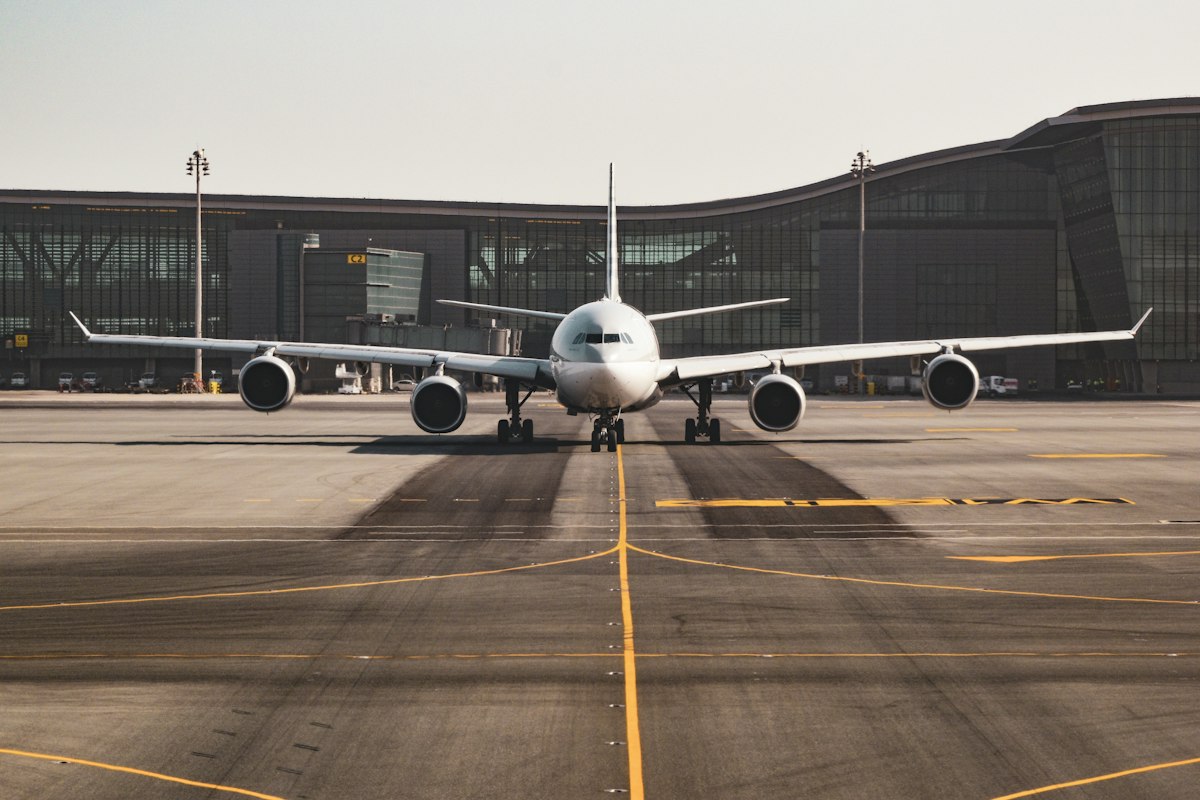 In summary, the Malaysia Airlines Business Class experience for this specific Seoul to Bangkok route is not about opulence; it's about efficiency. It provides a comfortable, productive environment to accrue 280 Tier Points at an exceptional CPTP, allowing you to focus on the numbers, not the minor inconveniences of air travel. This is a cold, hard deal for those who understand the game. Exploit it while it lasts.