

Qatar Airways Cancelled My Flights, Then Refused to Count the Sectors: 8 Weeks Inside Privilege Club (2026)

Qatar Airways Cancelled My Flights —
Then Spent Eight Weeks Refusing to Count Them
“They build the best business seat in the sky, and run one of the most dysfunctional customer-service operations I have ever had to depend on. Both things are true — and only one of them wins awards.”
Qatar Airways makes the finest business-class seat in the sky, and behind it runs a Privilege Club and customer-service operation that, over eight weeks in 2026, came closer to outright dysfunction than anything I have experienced from a major airline. In that time I opened five separate cases with its Privilege Club team, wrote to the airline’s Group Chief Executive, and lost count of the live chats — all to get an answer to one simple question the airline had itself created and then refused, over and over, to give. This is the full, documented account: the cancelled flights, the five cases, the arithmetic that did not add up, the CEO letter that was ignored, the Avios that vanished, and the 08:47 Sunday phone call that finally said everything. If you want to know what Qatar Airways customer service is actually like when something goes wrong — not in the cabin, but on the ground — here it is, with the receipts.

The airline’s one proactive gesture in eight weeks: a call at 08:47 on a Sunday, lasting one minute, that explained nothing.
The short version
Qatar Airways cancelled two flights I had booked on its own aircraft — a safety decision I fully support. It then spent two months refusing to say whether those cancelled sectors would count toward my loyalty-tier qualification, across five separate cases in which the question was simply never addressed. A formal letter to the Group CEO was brushed aside. A botched Avios upgrade left around 90,000 of my miles frozen for days. Its one proactive gesture — a callback — arrived at 08:47 on a Sunday and told me nothing. And, as you will see, a friend on another continent was put through an almost identical ordeal at the same time. The cabin is world-class. The service behind it is on the brink.
How it began: a cancellation I do not dispute
In spring 2026, as conflict closed large parts of Middle East airspace, Qatar Airways cancelled flights through the affected region. Two of them were mine — a return I had booked and paid for on Qatar Airways’ own aircraft, intended, among other things, to complete the minimum number of Qatar Airways sectors the airline requires to qualify for the tier I was working toward. Let me be completely unequivocal: cancelling those flights was the right call. With the security picture as it was, the airline’s duty of care to crew and passengers came first, and nothing in this account disputes that decision for a second. My quarrel is not with the cancellation. It is with everything Qatar Airways did — and failed to do — in the eight weeks that followed.
The mechanics were simple enough. With its own metal grounded, the airline rerouted me onto partner aircraft — British Airways to London, and onward — so that the sectors I had meant to fly on Qatar Airways were instead flown on other airlines. The points, eventually, were credited. The sectors were the problem. And the problem was not really the policy. It was that, for the better part of two months, I could not get a single person to tell me what the policy even was.
The one question nobody would answer
The question was simple, and I asked it in more or less the same words for eight weeks: would the sectors Qatar Airways had cancelled — flights I had booked on Qatar Airways, that Qatar Airways chose not to operate — still count toward the airline’s own minimum-sector requirement for tier qualification? Not the points; those I was not especially worried about. Just the sectors. It is not a complicated question. It has a yes or a no.
What I got instead, across five separate cases and more live chats than I can count, was an answer to a different question entirely. Every agent addressed the crediting of Avios and Qpoints — which flight had earned what — because that is the box the system gave them to tick. Not one, for the better part of eight weeks, addressed the actual question of whether the cancelled Qatar Airways sectors would be honoured toward the sector count. It was as if the query had no field to go in, so it fell through the floor, again and again and again.
Five cases, and the service-request carousel
Let me walk you through how that felt, because the texture is the whole point.
Early May: an agent escalates a missing-points claim and tells me to check back in 96 hours. I check back. Nothing has moved. Mid-May: a second agent raises a fresh claim, promises an update ‘within 30 days’, and — when I ask about the cancelled sectors — tells me to raise a service request. I point out that I already have several open. I am told to raise another. When I observe that this means opening a claim about a claim I have already raised, the answer is, essentially, yes.
Late May: a third agent, unfailingly kind, tells me my case has ‘already been escalated from our side’, promises a callback, and asks me — again — to raise a service request. I explain, again, that I have four. Three are by now marked ‘resolved’, though not one of them resolved, or even mentioned, the question I actually asked. The fourth is open and equally silent on it. By the end there were five. Not one gave me an answer.
This is the carousel, and it is worth naming precisely, because it is the core of the failure. Every agent is courteous. Every agent is powerless. Every agent reaches for the same script — raise a service request, allow three to five working days, contact us again — and every loop deposits you exactly where you started, minus an hour of your life. None of this is the agents’ fault; you cannot blame the orchestra for the score. It is a system that has quietly confused the act of logging a request with the act of answering one, and no longer notices the difference.
The answer, when it finally came
After weeks of this, one agent — and I want to credit him, because his was the single honest, direct reply in two months — simply told me the truth: the cancelled flights would not count toward the sector requirement, and no exception applied. That was it. That was all I had ever wanted: a yes or a no. It took eight weeks and five cases to get it.
And here is the part I will say plainly, because it matters: I do not even dispute the airline’s right to the policy. A carrier may reasonably ask that its status holders actually fly its aircraft. But these were not ordinary circumstances. The reason the aircraft did not move was Qatar Airways’ own safety decision, not any choice of mine. A loyalty programme that refuses to count the very sectors its own airline cancelled is entitled to do so — and it should not be the least bit surprised when its most engaged members quietly start packing for the exit.
✈️ Planning your own Oneworld points run?
Award space and business-class fares move fast, especially out of the Gulf. Check live prices and map your own Tier Point or Avios run before the schedule shifts.
Search Flights on AviasalesThe arithmetic that did not add up
There was, along the way, a smaller absurdity that tells you everything about the quality of the information Qatar Airways was handing its members. In formal correspondence, the airline told me I was ‘required to earn an additional 40 Qpoints’ to qualify. My account, at that moment, sat comfortably above the airline’s own reduced threshold — the dashboard, in plain text, read ‘+0 Qpoints’. I was not 40 short. By the airline’s own numbers, I was 51 beyond. I have read that email many times and I still cannot reconstruct the calculation by which a surplus of 51 became a shortfall of 40.
And that is the charitable reading. The uncharitable one is the question I put in writing: if a member who has clearly exceeded the threshold is being told, formally, that he has not, how many others are being handed similarly creative figures — and quietly acting on them? So I did the only thing the process had left open to me. I wrote to the Group Chief Executive of Qatar Airways, and set the whole thing out. You can read the letter in full below. It is, I think, a civil letter; I hold no personal quarrel with anyone at the airline. But it does not pull its punches on the substance.
The letter to the Group CEO, in full — click to open, zoom and read.
The silence that answered it
The letter was, as far as I can tell, brushed aside. What came back was the machinery: the same escalations ‘to the relevant team’, the same assurances that my concerns had been ‘noted’ and would be ‘shared’. No engagement with the arithmetic. No answer on the sectors that a chief executive’s office, of all places, might have been expected to give. In the letter I had predicted, half in jest, that by the time anyone read it the matter would have resolved itself — because I had already booked the flights to force the sector count myself. I was right. The escalation, if it was ever read at all, arrived to find its own subject obsolete.
Because that is how it ended: not with a resolution, but with me flying a fresh return to Tokyo — the better part of twenty thousand kilometres — for no purpose whatsoever beyond making a number advance in Qatar Airways’ system, a fortnight after I had already returned from Tokyo the first time. I got the tier. I intend to enjoy it thoroughly. But sit with what that actually means: the airline’s own process could not credit me correctly, so its de facto remedy was for me to burn a fortnight and twenty thousand kilometres of flying to do its arithmetic on its behalf.
The Avios that vanished
If you think the loyalty desk is the only part of the machine that misfires, let me tell you about the miles. Trying to upgrade a single leg with Avios, I hit an error. The card payment was reversed — twice — but the Avios were not: roughly 90,000 of them, deducted across two failed attempts, sat frozen on hold in my account. The agent, courteous once more, submitted a refund request and assured me the miles would be returned ‘automatically’. They eventually were — after I chased them. It is a small thing beside the rest. But it is the same thing in miniature: a system that takes reliably and gives back only when pursued.
The 08:47 call, and a survey into the void
And then, at the very end of all this, Qatar Airways finally did something proactive. It called me. At 08:47. On a Sunday.
I answered braced for the worst, because a Doha number ringing before nine on a weekend — while my partner, for whom I am the listed emergency contact, was airborne on a Qatar Airways flight over a region the airline had itself stopped flying through — is not a call you let ring out. For half a second, my morning went somewhere very dark. The call lasted a minute, named no subject, and told me nothing. Only after I chased it down over chat eleven days later did I learn what it had been: a callback closing an entirely trivial matter — a welcome-email template I had flagged weeks earlier, purely as a courtesy, because it overstated an extra baggage allowance by 5 kg, a figure lifted from a different membership tier, and I had not wanted other members misled by it.

Only after I asked: the agent confirms the dawn call was closing a minor template correction I had flagged as a courtesy — a purpose never spoken on the call itself.
Read the architecture of that again. The airline’s systems knew exactly why they were calling: a case, a resolution, a note of thanks. The human they sent to phone me at quarter to nine on a Sunday conveyed none of it. A resolution to a footnote, delivered at dawn, badly enough to frighten. And in the same window, an onboard feedback survey I submitted vanished without any acknowledgement at all — the forms, I was told on chat, send none by design; you post your experience into a void and wait ten working days for the silence to become official. When I raised the dawn call as a formal complaint, the case was escalated to Privilege Club Member Services with a written promise that I would hear back within 72 hours. That was well over a week ago. I have heard nothing.
📱 Land connected in Doha
If you are transiting Doha, skip the roaming charges. Grab a global eSIM before you fly and you are online the moment you land — useful when you are stuck chasing a claim from the lounge.
Get Your Airalo eSIMWhere the newest jets went: Teruel, and what was left to fly
There is one more layer to this story, and it is parked in the Spanish desert. In late March, as the airspace crisis bit hardest, Qatar Airways ferried a substantial slice of its fleet out of the region altogether — to Teruel Airport in Aragón, Europe’s largest aircraft storage and maintenance site. Flight-tracking data counted 22 Qatar Airways jets on the ground there by late March, most arriving in a single six-day surge — and not the old ones, either: A380s, A350s and Boeing 787s, the flagships, flown in from Doha, London, Los Angeles and half of Africa to sit out the conflict on Spanish tarmac. The airline described the move as a temporary positioning of aircraft outside Qatar, to be returned progressively as operations normalise; analysts read the scale of it as key assets being moved out of harm’s way with an eye on a longer disruption. Whether the deeper calculus was prudence, fleet preservation, or the quieter arithmetic of war-risk cover, the airline does not say, and I will not pretend to know. What it meant in practice, however, is not in dispute: the newest metal sat in the desert, and the schedule that survived fell disproportionately to the older end of the fleet — the veteran 777s that have carried this airline for the better part of two decades, and, on my home Larnaca run, the fifteen-year-old A320s this publication has already reviewed, museum-piece entertainment and all.
Which brings me to my partner’s journey to Japan, flown in the QSuite while all of this — the cases, the letter, the silence — was still unresolved. On the outbound, boarding on one leg was cancelled outright: an engine failure on the A320 that flew for Qatar for the better part of 15 years, caught before departure. Let me be fair about that, because fairness is the house style: an engine problem found at the gate is the system working, and I will take a cancelled boarding over a confident dispatch every day of the week. But then, on the return, he watched from his seat as the left engine stuttered and breathed out a cloud of white smoke mid-air on his antique A320-200. Two engine events, one round trip, one passenger. I cannot tell you which aircraft would have operated those sectors had the fleet been whole; nobody outside Doha can. I can tell you what did operate them — and that when an airline’s newest jets are sunning themselves in Aragón, questions about the age and strain of what remains flying stop being rhetorical.
This is not just me: a pattern, not an incident
Here is why I am no longer prepared to write any of this off as bad luck. While I was living through my version, a friend was living through his — same airline, different continent, almost identical failure. I have anonymised his account at his request, but the facts are his.
His return from Cape Town to Málaga was cancelled. He called Qatar Airways every day, often for hours on hold, and repeatedly asked to be rerouted at the earliest opportunity, including on other airlines where earlier seats existed. On the day of the cancellation he was offered an alternative flight; he accepted it the same day by email, and confirmed again in follow-up messages. It was never processed. When he went to the airport in person to sort it out, there was no Qatar Airways desk; by phone, he was told — falsely, and flatly disproven by his own email records — that he had never confirmed and never replied. Days later, another agent conceded the failure had been Qatar Airways’ own — but by then the offered flight was gone. Only after a further hour and a half on the line, and considerable insistence, was he finally rebooked, on British Airways, roughly twenty days after he should have flown home. The delay cost him around thousands of Euro in accommodation, food and transport, and a chunk of his annual leave he will not get back. The most telling thing is though, that Qatar Airways is doing what it can to avoid paying compensation.
Two members. Two continents. Two bookings with nothing in common except the airline on the ticket. And the same failure mode in both: a cancellation nobody disputes, followed by a support operation that cannot execute what it promises, cannot answer what it is asked, and cannot escalate what it flags. That is not misfortune. That is a system. And a system that produces the same outcome for unrelated customers, over and over, is the very definition of a structural failure — a customer-service operation on the brink of dysfunction.
Is Qatar Airways customer service actually bad? What the data says
Here is the twist, and it is an important one for anyone weighing this up. By the headline numbers, Qatar Airways is superb at customer service. AirHelp’s 2025 ranking places it first in the world overall, with the highest customer-service score of any airline; Skytrax has crowned it the world’s best more times than anyone. But look closely at what those actually measure: the cabin. The crew. The food. The comfort in the air. They say almost nothing about the part of the airline you meet when a booking breaks — the contact centre, the live chat, the loyalty desk, the complaint you file and never hear back on. That is a completely different operation, and it is the one this account is about.
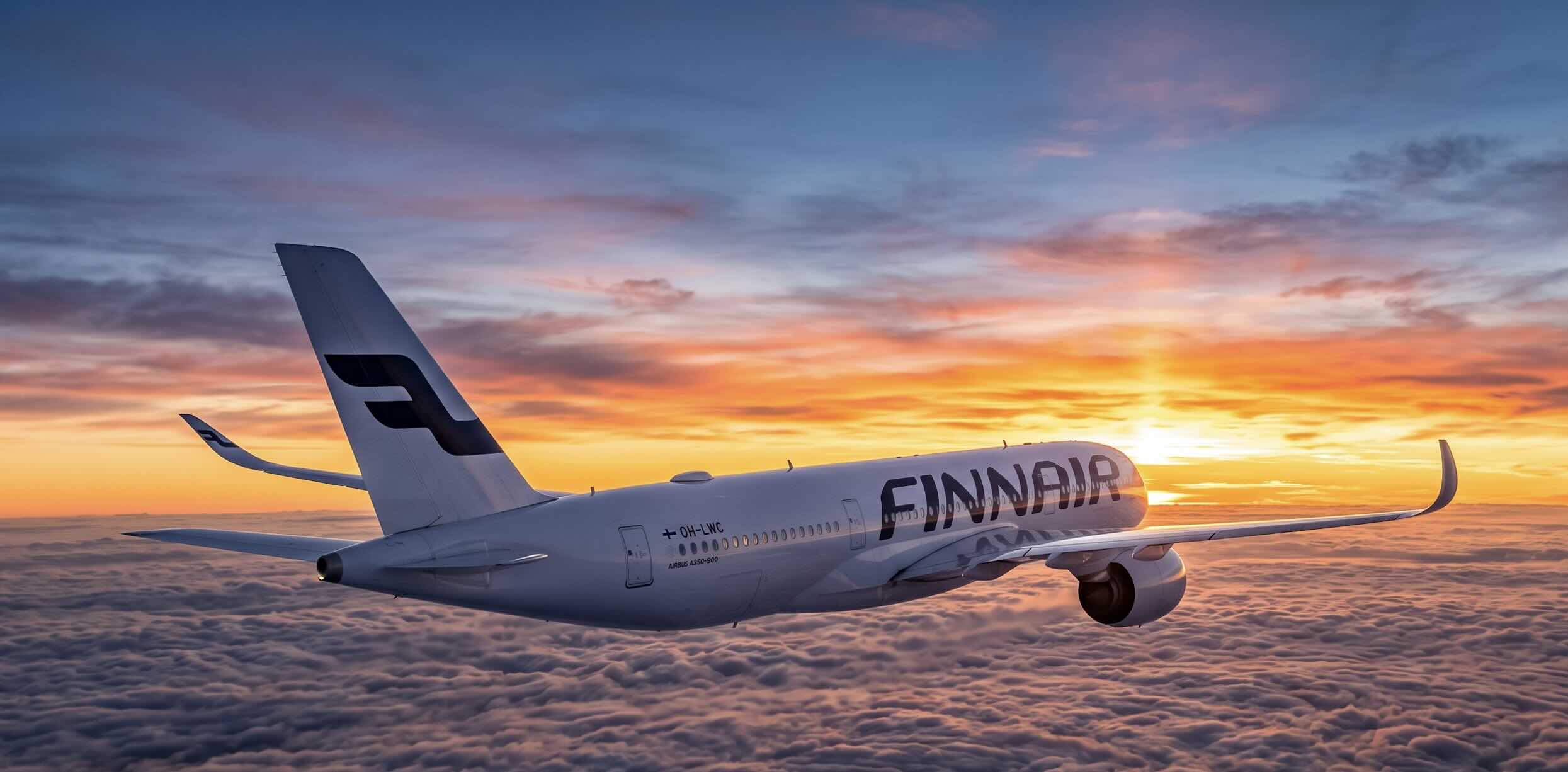
It is exactly that gap that led us to add a sixth dimension to the Avios Intelligence Oneworld ratings — After-Sales & Loyalty — scoring not the seat but the airline you meet when things go wrong. On the seat, Qatar Airways earns a 9.5 from us, and deserves every decimal of it. On how it handles you when the plan falls apart, after everything above, it does not come close. The two carriers now sitting at the top of that ranking, are clearly JAL and Cathay, and Finnair, is precisely where I am now moving my flying reward program.
The customer at the heart of every decision
The timing carries a certain grim poetry, because Qatar Airways is at this very moment telling the world how deeply it cares. It has just created a new Chief Customer Officer role, hired from British Airways, and its group chief executive marked the appointment by pledging to put the customer at the heart of every decision
. Every decision, presumably, including the one to telephone an emergency contact at dawn to read him a script with the contents removed — or the one to answer a simple question, five cases deep, by asking him to open a sixth. I do not doubt the sincerity of the press release. I doubt, profoundly, its circulation.

The QSuite my partner flew to Japan — still the finest business seat in the sky. The seat was never the problem; everything around it was.
The Verdict: A World-Class Airline With a Broken Front Door
Take any single item here in isolation and it is forgivable. A cancelled flight in a crisis. A miscalculated points balance. A frozen refund. A badly-timed phone call. But that is not how I experienced Qatar Airways, and it is not how my friend did either. We experienced all of it, in sequence, across weeks, through every channel the airline offers — and so, I now suspect, did a great many members who simply gave up quietly before writing any of it down.
The QSuite is still the best business seat in the sky and Al Mourjan is still the finest lounge in the alliance; none of that has changed, and this is not a hit piece on the product. It is a warning about everything around it. An airline can win every cabin award going and still be quietly failing the people who fly it most — the ones who hit a problem, reach for help, and find a carousel where an answer should be. Until Qatar Airways fixes the desk, the phone, the chat and the loyalty operation behind that magnificent seat, the world’s best airline will keep losing, one exhausted member at a time, the loyalty it spent a fortune building.
Qatar Airways Privilege Club & Cancelled Flights: FAQ
Is Qatar Airways customer service good?+
It depends entirely on where you meet it. In the cabin it is genuinely world-class, and independent data agrees. On the ground — the contact centre, the live chat, the Privilege Club desk, the complaint you file and wait on — my 2026 experience was among the most frustrating in the Oneworld alliance: five open cases over eight weeks, a simple question never answered, and escalations that led nowhere.
Do cancelled Qatar Airways flights count toward Privilege Club tier qualification?+
No. Qatar Airways confirmed to me in writing that sectors it cancels do not count toward its minimum Qatar Airways sector requirement for tier qualification — even when the airline itself cancelled them, and rerouted you onto a partner. No exemption or waiver was offered. If your qualification depends on flying a set number of Qatar Airways sectors, a cancellation can cost you the tier regardless of the reason.
Why are Qatar Airways planes stored in Teruel, Spain?+
During the 2026 Middle East airspace crisis, Qatar Airways ferried a large slice of its fleet — including A380s, A350s and Boeing 787s — to Teruel Airport in eastern Spain, Europe’s largest aircraft storage and maintenance site; flight-tracking data counted 22 Qatar Airways jets there by late March, most arriving in a single six-day surge. The airline describes it as a temporary positioning of aircraft outside Qatar while operations are disrupted, to be returned as flying normalises. The practical consequence for passengers: with many of the newest widebodies parked, the schedule that remains falls disproportionately to the older end of the fleet.
How long does Qatar Airways take to resolve a complaint or claim?+
Officially, up to 10 working days for feedback and 72–96 hours for follow-ups. In practice, my central question went unanswered across five separate cases over roughly eight weeks, with three cases marked ‘resolved’ without ever addressing it. An onboard survey I submitted received no acknowledgement at all — the forms, I was told, send none by design.
What happens if an Avios upgrade fails on Qatar Airways?+
It can go wrong badly. When my upgrade errored, the card charge was reversed but the Avios were not: roughly 90,000 miles were deducted across two failed attempts and left frozen on my account for days. The agent said they would be refunded automatically. They eventually were — but only after I flagged it. If an upgrade fails, screenshot everything and chase the refund.
Is Qatar Airways still the World's Best Airline?+
By cabin metrics, yes — Qatar Airways tops Skytrax and led AirHelp's 2025 ranking for onboard service. But those awards measure the seat, the crew and the food, not the contact centre or the loyalty desk. This account is about the second thing, and on that measure the airline is nowhere near its own reputation.
Should I stay loyal to Qatar Airways Privilege Club and collect Avios?+
The onboard product and Avios redemption value are excellent, and for pure flying I would still recommend the airline. But weigh how it behaves when something goes wrong, because that is when loyalty is actually tested. After my experience I am moving my status and spend toward Cathay Pacific and Japan Airlines, and directing European flying to Finnair — a programme that, unlike Qatar Airways, credits the sectors its own airline cancels.